There is a particular sound that announces Durga Puja in Kolkata. The first beat of the dhaak. The conch shell in the distance. The smell of dhuno drifting through an old courtyard. And somewhere, behind an enormous wooden door, a family kitchen beginning its most important cooking of the year. For Kolkata’s Bonedi Bari Durga Puja, the festival does not begin with the opening of a pandal. It begins much earlier—with memories, rituals, recipes and preparations that have been passed down through generations.
These old houses are not simply heritage properties. They are living archives. Their walls have seen families grow, fortunes rise and fall, neighbourhoods change, political upheavals, Partition, migration and the transformation of Calcutta into Kolkata. Yet every autumn, something remarkably familiar happens. The family gathers. The kitchen comes alive. The dhaak begins. And Ma Durga comes home.
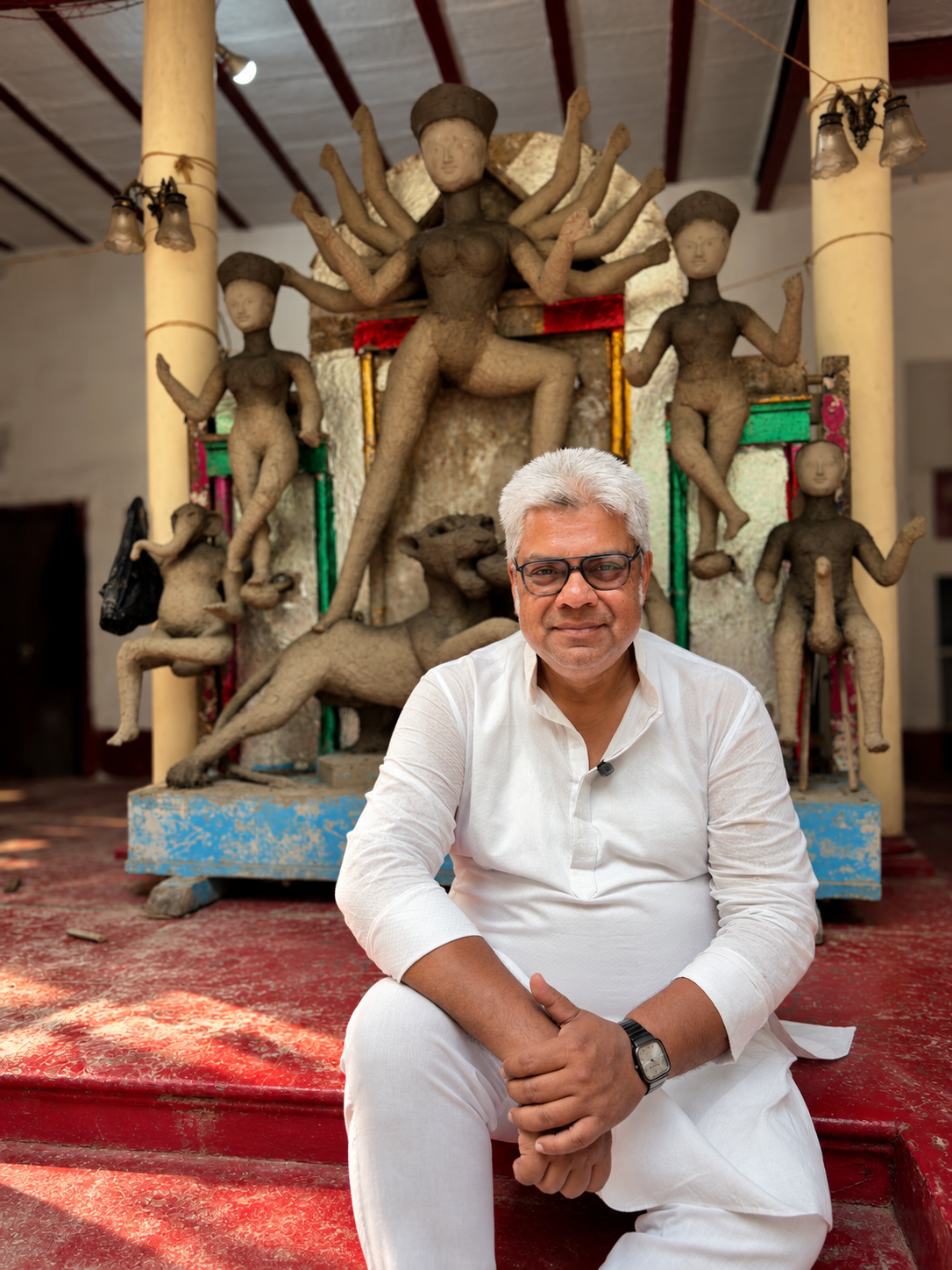
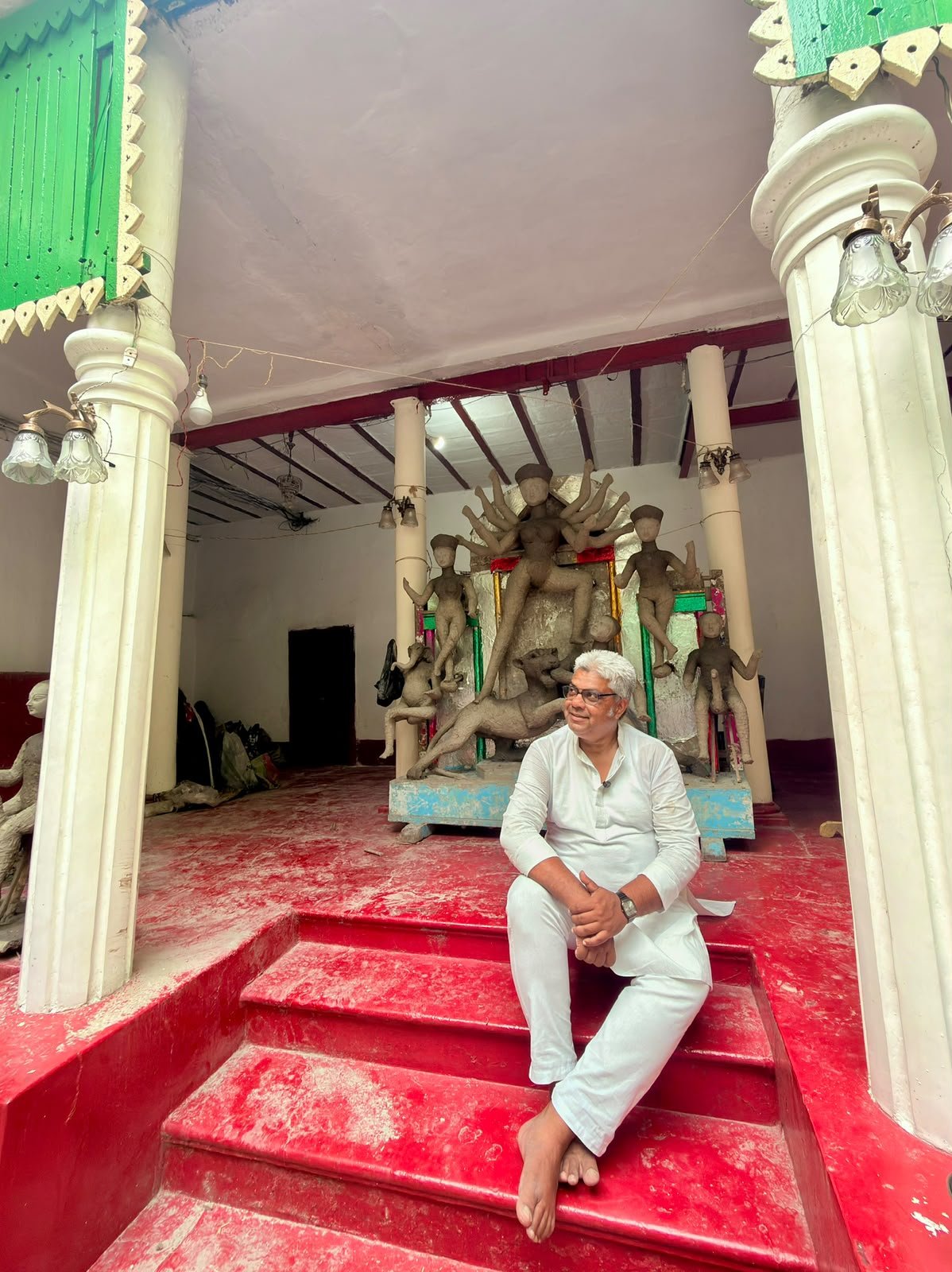
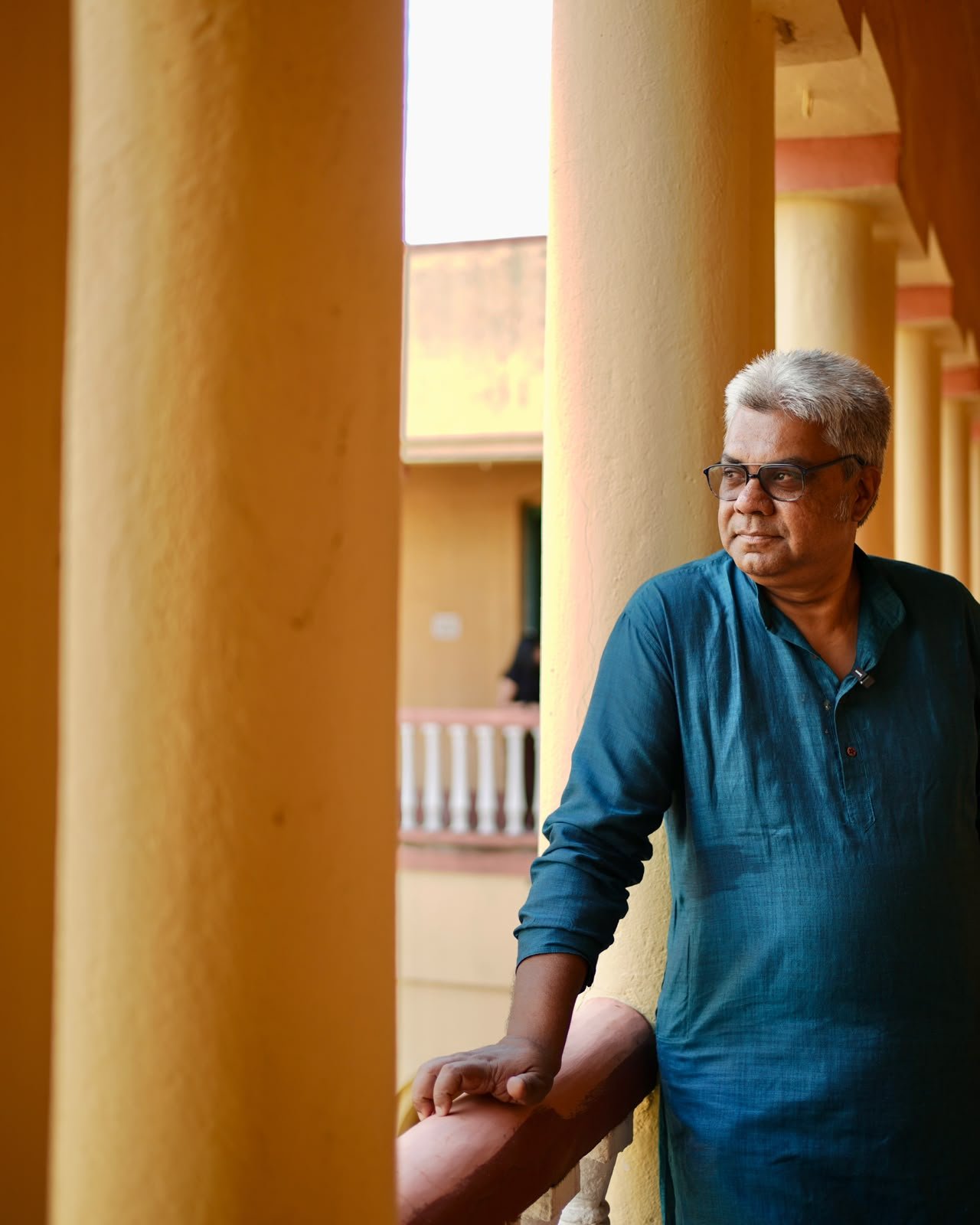
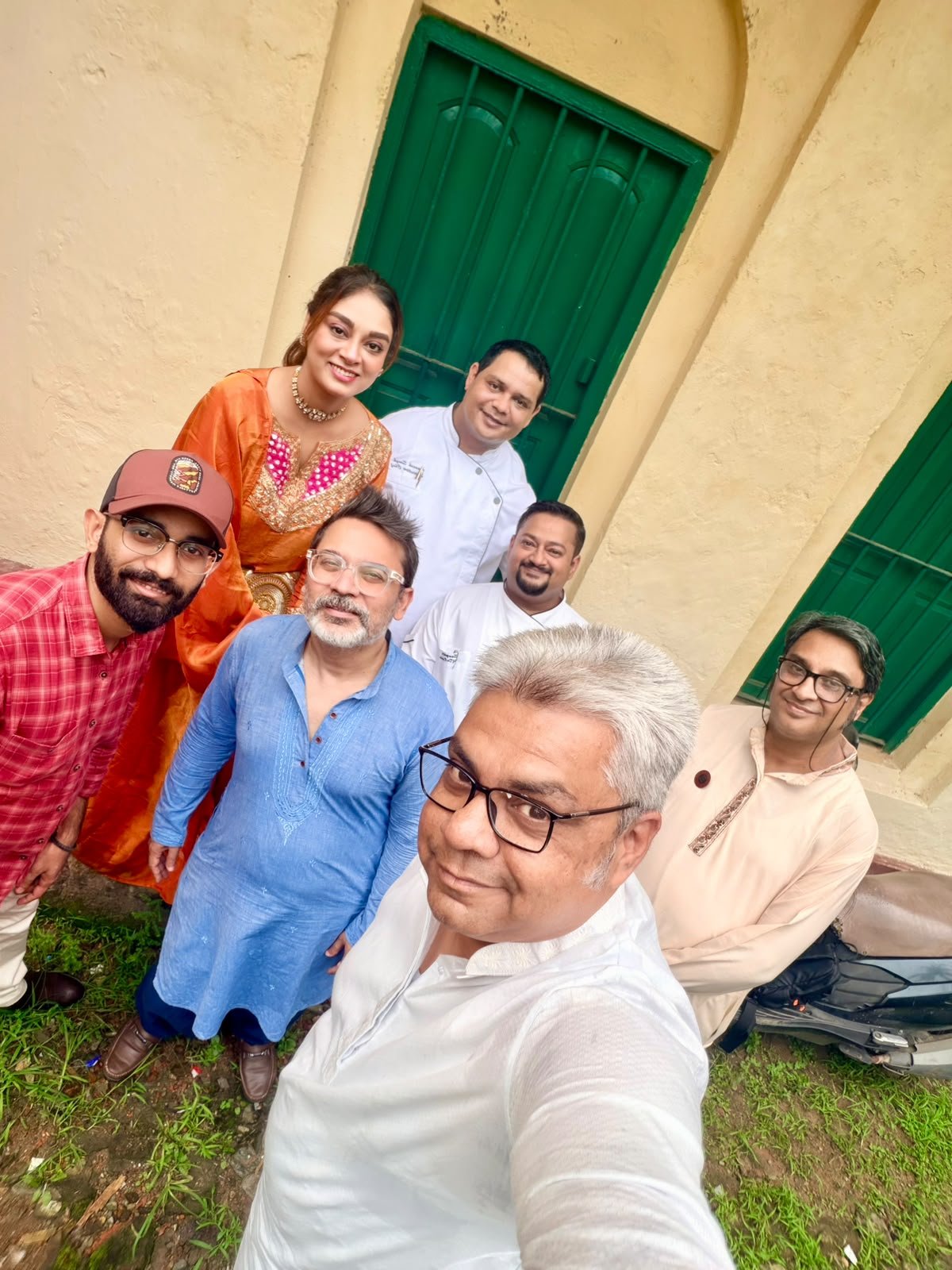
This is the idea behind Gateway to Kolkata, the Foodka × Fairfield by Marriott Kolkata culinary heritage journey, which takes audiences inside ten historic Bonedi Bari households to discover their Puja traditions, family stories and signature dishes. The campaign brings together 10 heritage houses, 10 family stories and 10 signature dishes, with a Fairfield chef learning the culinary traditions directly from each household.
Because perhaps the best way to understand Kolkata’s Durga Puja is not by looking at the biggest pandal. It is by entering an old family home.
1. Sabarna Roy Chowdhury: The Puja That Predates Kolkata
There are old Pujas. And then there are Pujas old enough to have witnessed the making of Kolkata itself.
The Sabarna Roy Chowdhury family’s Durga Puja traces its origins to 1610, when Roy Lakshmikanta Gangopadhyay Majumder Chowdhury and his wife Bhagabati Devi began the Puja at Aatchala Bari in Barisha. More than four centuries later, the tradition continues across eight branches of the family. Aatchala Bari, Barobari, Mejobari, Majherbari, Benakibari, Kalikinkar Bari, Birati Bari and Nimta-Pathanpur Bari each carry their own version of the family tradition. At Aatchala Bari, Durga is worshipped in the distinctive Ekchala form, with Lakshmi, Saraswati, Kartik and Ganesh together under one frame.
Different branches have different rituals too. Some begin their celebrations much earlier than Sasthi. Barobari preserves the rare tradition of Ardharatri Puja, while Nimta-Pathanpur has its own distinctive Sandhi Puja rituals. It is a beautiful example of how a family tradition can grow without losing its roots.
2. Hara Kutir: 336 Years of Faith, Food and Family
In the historic lanes of Pathuriaghata stands Hara Kutir, where the Ray-Banerjee family has welcomed Ma Durga for an extraordinary 336 years. The house itself seems to belong to several centuries at once. What began as a humble mud structure eventually became a grand marble residence, combining Islamic arches, Gothic elements, and Italian detailing. But Hara Kutir’s most fascinating story may actually be found in its kitchen.
Here, bhog preparation is treated almost like a ritual within a ritual. When cooking begins, the kitchen doors are closed. Silence takes over. Traditionally, the men of the family prepare the bhog. Then comes the feast. Luchi and aloo tarkari. Khichuri. Panch bhaja. Chanar kalia. Chutney. Payesh. Rosogolla and Lady Keni.
Around 300–400 people are served during the Puja days. And then there is Chandoni Kheer, the distinctive Dashami delicacy made with milk, cane jaggery, saffron and nuts. Three hundred and thirty-six years later, the kitchen still falls silent before the feast begins. Some traditions survive because people remember them. Others survive because people continue to cook them.
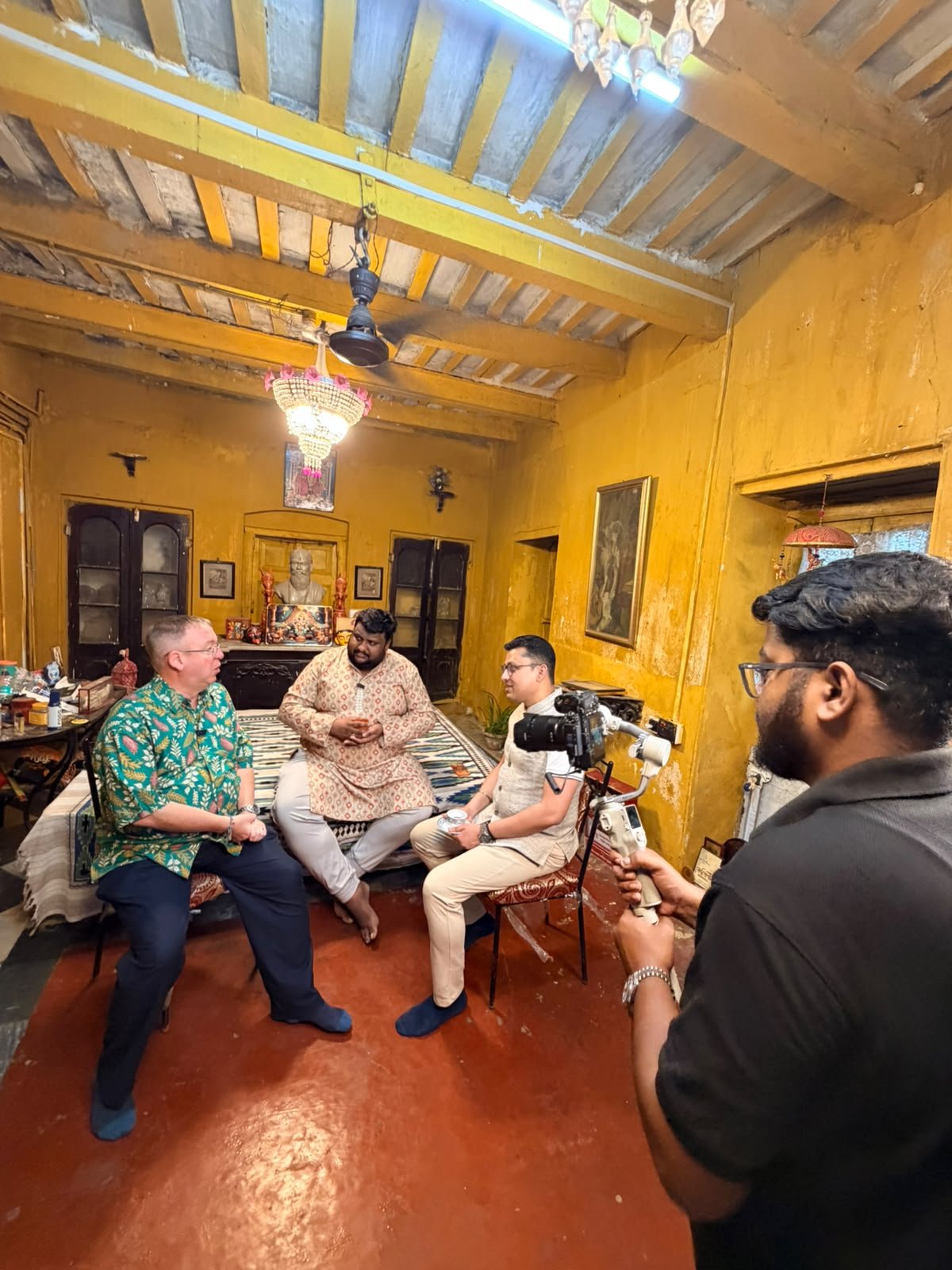
3. Darjipara Mitra Bari: When Nine Generations Come Home
The Darjipara Mitra Bari Puja is 219 years old. But perhaps its most beautiful statistic is not 219. It is nine generations. The family tradition has travelled across nine generations, carrying with it distinctive rituals, recipes and an unmistakable sense of belonging. At Mitra Bari, Kumari Puja is observed every day of the Puja, rather than being restricted to a single occasion. The family itself lights the sacred fire before handing it over to the priest—a small but deeply symbolic reminder that the Puja begins with the family. And the kitchen becomes a family gathering place. Women from three generations prepare bhog together, roasting moong dal in ghee and making traditional accompaniments, papad and pickles.
Then, from Nabami, fish enters the Puja menu. Rohu. Katla. Familiar flavours, prepared in an unfamiliar setting. But perhaps the most iconic feature is the Goddess herself. Her lion has a distinctly horse-like face, symbolising the strength of the lion and speed of the horse. Every year, family members scattered across cities and countries return. The house fills up. Meals are shared. Old conversations start again. And for a few days, everyone is under the same roof.
4. Baboo Subol Chand Chunder: A Different Durga
At Baboo Subol Chand Chunder’s Thakurbati, Durga Puja has been celebrated since 1761.
The Puja began in Jorasanko and later moved to Jhamapukur. The family’s history is closely connected with the social and cultural world of nineteenth-century Bengal. But it is the family’s representation of Durga that immediately stands apart. Here, the Goddess is worshipped as Shib-Durga, seated on the lap of Lord Shiva in the Abhaya Roop. There is no animal sacrifice. Instead, the Puja is marked by distinctive rituals including Dhuno-Porano and the spectacular lighting of 108 earthen lamps.
Even the bhog has its own rules. Salt is completely avoided. Sweets dipped in sugar syrup are not offered. And Sindoor Khela is not practised. It is a wonderful reminder that there is no single template for a Bengali Durga Puja. Every household has its own Durga. Its own rules. Its own memories.
5. Badan Chandra Roy Bari: When Tradition Survived Turbulent Times
The Badan Chandra Roy Bari of Colootola has been celebrating Durga Puja since 1858.
The family tradition has survived political upheaval, communal unrest and dramatic changes in Kolkata. In 1946, during the communal violence in Calcutta, the family could not conduct the Puja at their ancestral home. The Goddess was temporarily moved to a relative’s house in Jorasanko before eventually returning. The ancestral house itself was built in 1858 and once covered more than a bigha, with halls, stables, a parlour and garden house. At the centre of the celebration stands a magnificent 10-foot Durga, decorated with gold ornaments and silver weapons.
Food has always been central here. A 1938 document records meals being arranged for between 500 and 1,000 people during the Puja. Today, feeding the community remains part of the tradition. Because sometimes the most meaningful part of a Puja isn’t the idol. It is the number of people who sit down together to eat.
6. Mullic Bari: the youngest of all
At Mullick Bari in Bhowanipore, Durga Puja is not just about rituals—it is also about the food that brings generations together. Like many old Bonedi Bari Durga Pujas in Kolkata, the celebrations here carry memories that are closely tied to the kitchen. Recipes, ingredients and methods of cooking have travelled through generations, quietly becoming a part of the family’s festive identity.
The bhog at Mullick Bari is therefore much more than an offering to Goddess Durga. It is a taste of a Kolkata that is slowly disappearing—the aroma of freshly cooked rice, dal, vegetables and traditional festive preparations filling the house during those special days. There is something wonderfully intimate about watching food being prepared for the deity and then shared as prasad, just as it has been for generations.
And perhaps that is what makes a Bhowanipore heritage Durga Puja so special. The history of the house isn’t found only in its architecture or rituals; it survives in its recipes too. At Mullick Bari, every serving of bhog carries a little bit of family history, nostalgia and the unmistakable taste of old Kolkata’s Durga Puja culinary tradition.
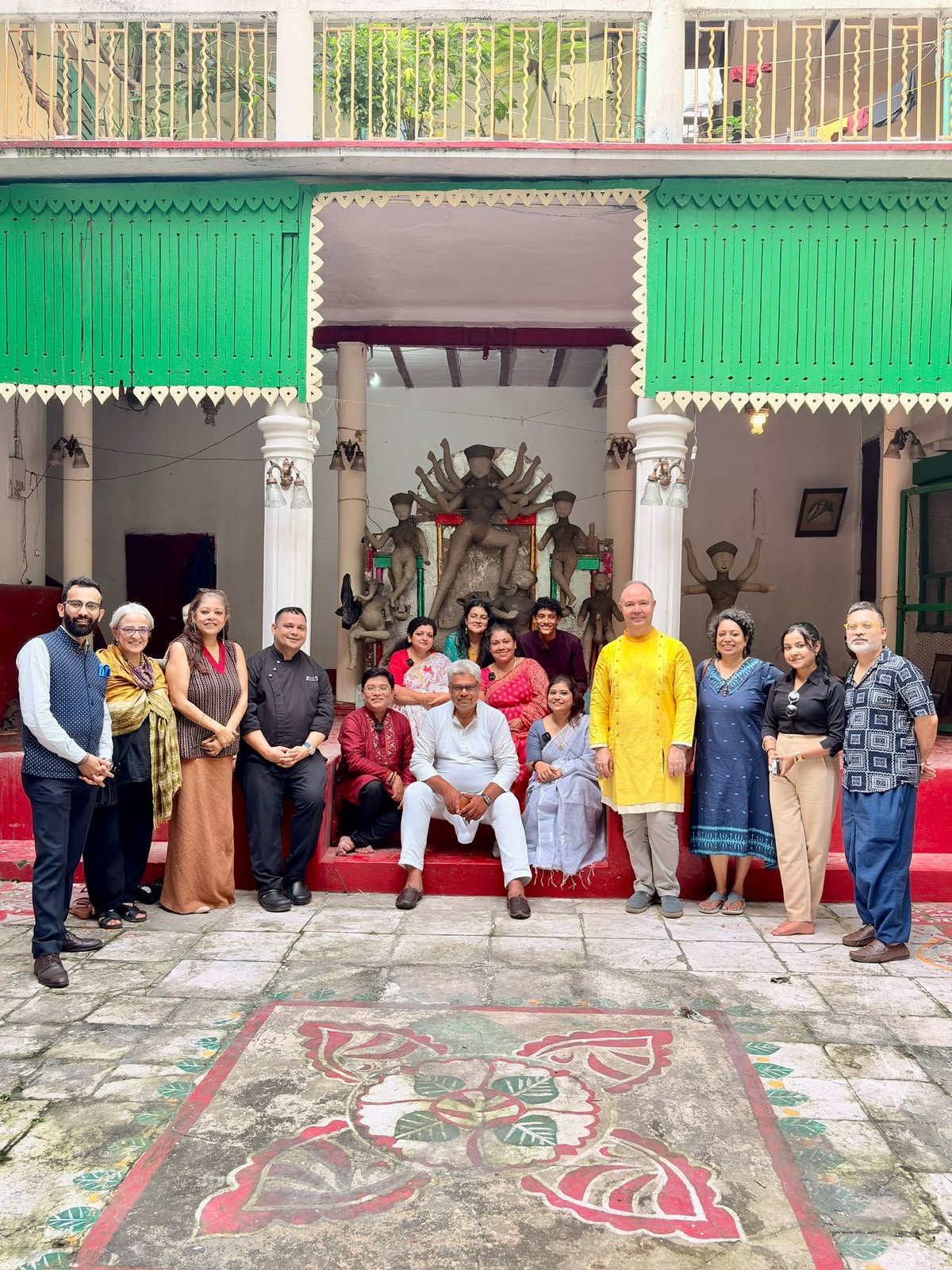
7. Basu Bari, Howrah: A Different Kind of Bhog
Cross the Hooghly and the story continues. At Basu Bari in Ramkrishnapur, Howrah, the family Durga Puja has continued for nearly two centuries. The family’s association with shipping and trade brought prosperity, and the Puja is believed to have begun after Ishan Chandra Basu received a divine vision. The family has also witnessed rituals change with time.
Animal sacrifice was once part of the Puja but was discontinued during the period of Mahatma Gandhi’s non-violence movement. The food tradition is particularly interesting. There is no traditional Annabhog. Instead, Basu Bari offers Moyda Bhog—freshly prepared luchis and fried savouries. The Ek Chala idol has a hand-painted Chalachitra, while the Goddess rides a distinctive whitish-silver lion.
Nearly 200 years later, the Puja remains an important part of Howrah’s living heritage.
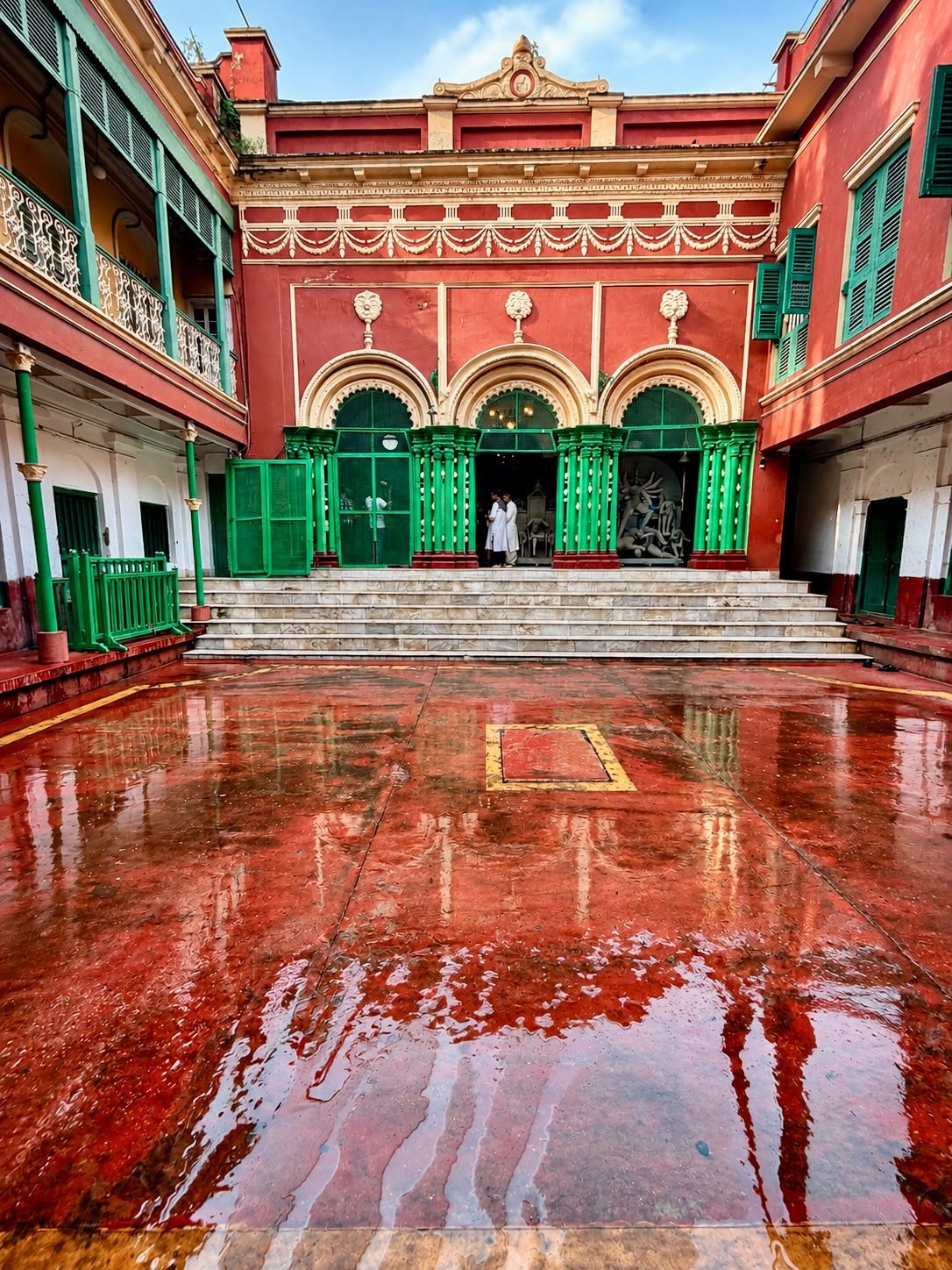
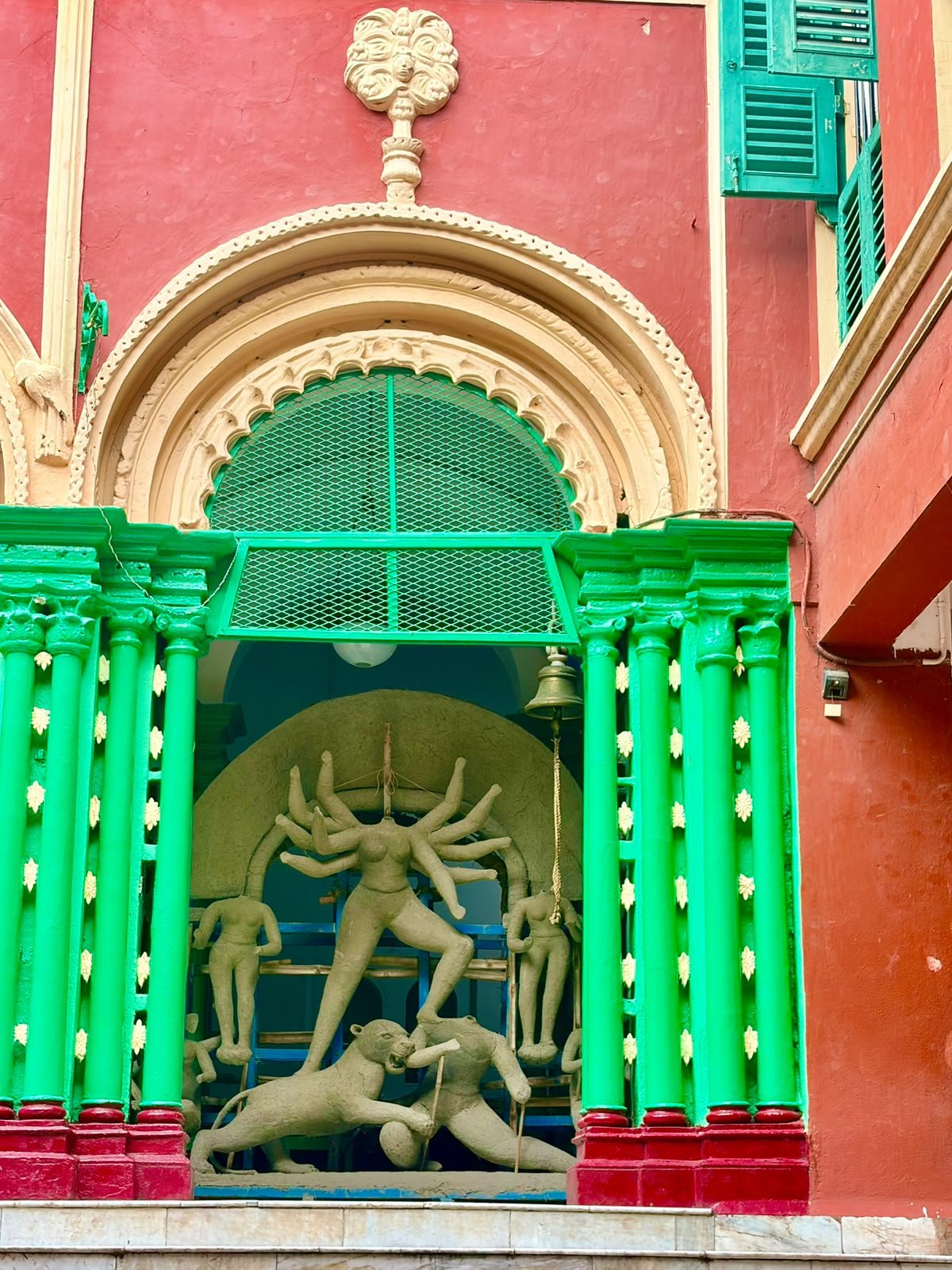
8. Sukhatara Sardar Family: A Puja That Crossed a Border
Some families inherit a Puja. The Sardar family carried theirs across a border.
The story began in Satkhira, in present-day Bangladesh, where a childhood experience of humiliation inspired the Sardar brothers to dream of creating their own Puja—one where nobody would ever be made to feel unwelcome because of their social or financial circumstances. That dream eventually became reality at Udayachal in 1942. The family travelled from West Bengal to their ancestral home every year, crossing the Ichamati. Partition changed the political map. But it did not immediately end the tradition. Then, in 1956, the family was forced to leave East Pakistan. They left their ancestral home. But the Puja travelled with them. Their memories, rituals and emotional connection to Satkhira crossed the border into West Bengal. It is perhaps one of the most poignant lessons of Bonedi Bari Puja:
A home can be lost. A tradition doesn’t have to be.
9. Thanthania Chandra Bari: From Saptagram to Kolkata
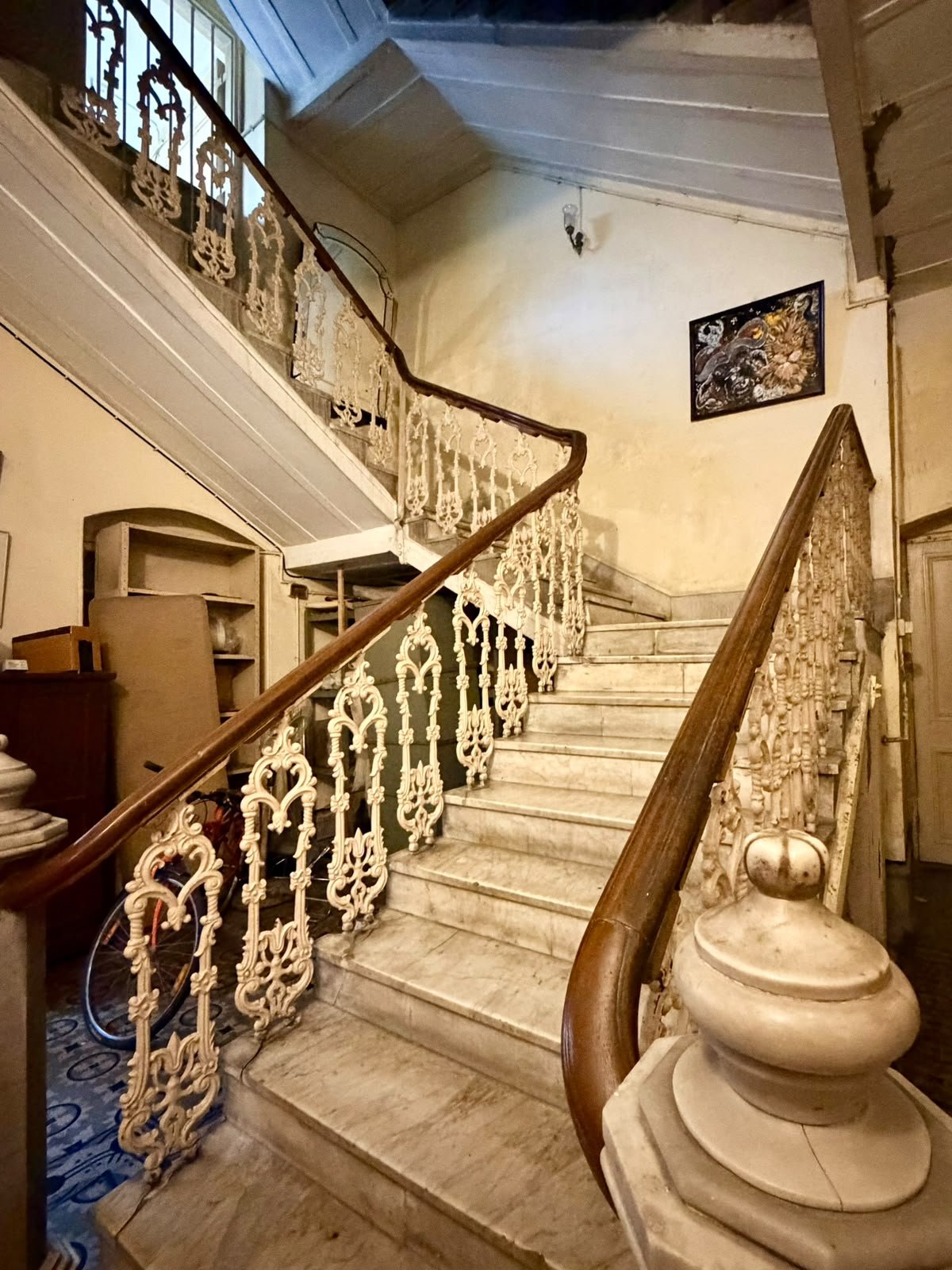
The story of Thanthania Chandra Bari begins in the old port city of Saptagram.
As the Saraswati River silted up and Saptagram gradually lost its importance, families began moving towards Sutanuti, Govindapur and Kalikata. The Chandra family was among them. They carried their Durga Puja tradition with them. One of the family’s most treasured links with that past is a Sindoor container associated with the Goddess. The original gold coin associated with the Puja was lost, but the ritual continued with a new gold coin minted in 1885. Every autumn, the old house fills once again.
The dhaak plays.
Dhuno fills the air.
Relatives return. And a tradition born in a lost Bengal port city finds itself alive in modern Kolkata.
10. The Mitter Family: 300 Years of Faith, Food and Family
At Rajarhat Bishnupur, the Mitter family’s Durga Puja dates back to around 1714.
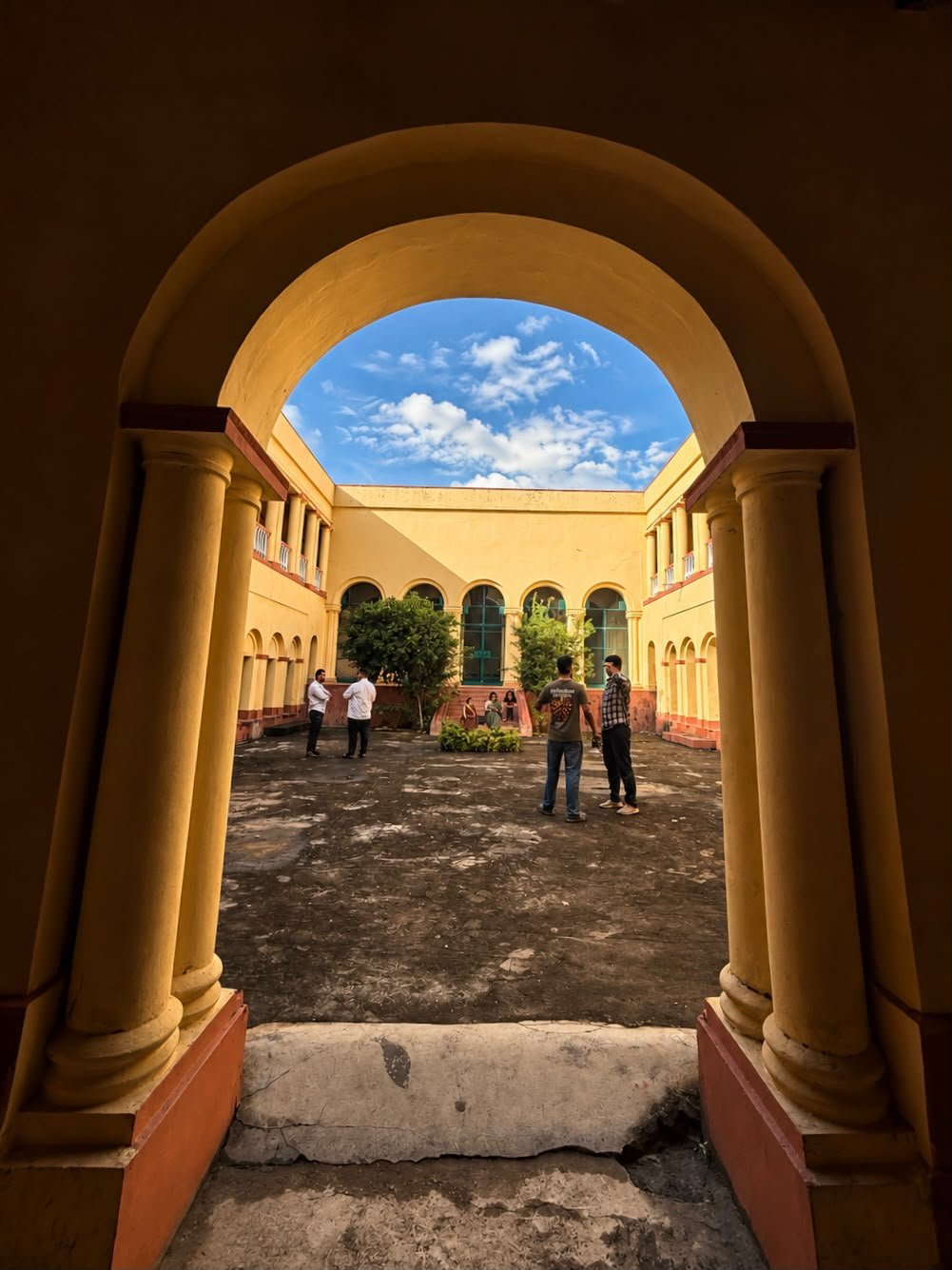
Once part of a large zamindari spread across 16 estates, the Puja has now become a celebration embraced by the wider village. Its rituals are extraordinary. Devotees take a holy dip in the pond before crawling towards the altar and participating in a ritual involving a woman carrying three pots of burning resin. A sacred Havan remains lit from Saptami to Navami.
And then comes the food. Goja. Bonde. Luchi. Chandrapuli. The family serves vegetarian food on Ashtami, while non-vegetarian meals feature on other days. Even after Bisharjan, food continues to connect people through homemade delicacies exchanged between relatives and friends.
At Mitter Bari, the Puja is ultimately about the same things that define so many Bonedi Bari celebrations:
faith, food and family.
Because Kolkata’s Durga Puja Is Also a Food Story
Perhaps after reading these stories, one thing becomes clear. You cannot tell the story of Kolkata Durga Puja without talking about food. Because in Bengal, food has never been merely food. It is memory. It is ritual. It is hospitality. It is identity. Every Bonedi Bari has its own language of the kitchen. At one house, the bhog may be entirely vegetarian. At another, fish may arrive on Nabami. One family may make luchi and fried savouries. Another may serve khichuri and panch bhaja. There may be payesh, Chandrapuli, chhanar kalia, shukto, papad, pickles, sweets or a recipe whose exact proportions exist only in the memory of a grandmother.
And that is what makes Bonedi Bari bhog so fascinating.
There is no standard menu. There is no commercial recipe card. There is no “one-size-fits-all” Bengali Puja thali. There is only family. And memory. And that slightly mysterious sentence every Bengali child has heard at some point: “Ei rannata amader barite ei bhabei hoy.” That sentence perhaps explains Bengali culinary heritage better than any cookbook ever could.
And Then There Was the Puja of Our Childhood
For many of us, the nostalgia of Durga Puja isn’t only about the Goddess. It is about what was cooking while the Goddess was being worshipped. It is waking up to the smell of ghee. It is watching luchi puff up in the kitchen. It is waiting impatiently for bhoger khichuri. It is fighting over the crispy bhaja. It is the sweet taste of payesh. It is the sound of someone shouting from the kitchen: “আর একটু নাও!” It is the enormous plate that somehow keeps getting refilled. It is the para’r pujo. The old house. The relatives who arrived from Delhi, Mumbai, Bangalore or somewhere even farther away. The cousin you hadn’t seen since last Pujo. The grandmother who insisted that nobody leave without eating. The thakur dalan filled with people. And the kitchen that seemed to work continuously for five days.
Perhaps that is why the culinary traditions of Kolkata’s Bonedi Bari Pujas deserve to be remembered alongside the architecture, rituals, and history. Because recipes, like houses, carry stories. A dish tells you where a family came from, what they believed.
What ingredients were available. What changed. What stayed. And who taught whom to cook. That is also the spirit behind Gateway to Kolkata. The Foodka × Fairfield by Marriott Kolkata journey doesn’t simply document ten heritage houses. It brings their culinary stories into the present—following a journey of Watch → Meet → Discover → Taste → Visit.
Ten houses. Ten families. Ten stories. Twenty dishes. But perhaps one larger story. The story of Kolkata itself. A city where old and new have always lived side by side. Where a 400-year-old ritual can exist next to a smartphone camera. Where an ancestral recipe can be learnt by a contemporary chef. Where a family that crossed a border can still remember the taste of home. And where, every autumn, the city seems to become a little softer.
The traffic is still there. The crowds are still there. The queues are still there. But somewhere between Sasthi and Dashami, Kolkata smells different.
It smells of dhuno. It smells of shiuli. It smells of ghee and bhaja. It smells of khichuri. It smells of luchi. It smells of a kitchen where someone is cooking for far more people than they had originally planned. And perhaps that is the real magic of Kolkata Durga Puja. Not just that Ma Durga comes home. But that everyone does. Some come back from another city. Some from another country. Some from another generation. And some simply come back to a taste they haven’t forgotten. Because years may pass. Families may scatter. Old houses may become smaller. Kolkata may change beyond recognition. But when Pujo arrives, someone will still light the oven. Someone will still fry the luchi. Someone will still stir the khichuri. Someone will still ask, “আর একটু ভোগ নেবে?” And for a moment, perhaps, we are all children again. Sitting in an old house. Waiting for Ma. Waiting for lunch.
Waiting for the next story.
Bon Appetit!!!
indrajit.lahiri@ymail.com
